
Call us
301-363-4651 (Available 9 a.m. to 5 p.m. CST from Monday to Friday)

| Code | CSB-MP822153AIAH |
| Abbreviation | Recombinant Avian infectious bronchitis virus N protein |
| MSDS | |
| Size | $660 |
| Order now | |
| Image |
|
| Have Questions? | Leave a Message or Start an on-line Chat |
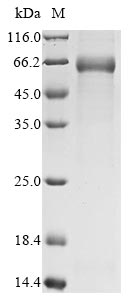
This recombinant avian infectious bronchitis virus nucleoprotein (N) is expressed in a mammalian cell system, which appears to help with proper protein folding and post-translational modifications. The complete protein covers amino acids 1 to 409 and comes with a C-terminal 6xHis-tag that makes purification and detection more straightforward. SDS-PAGE analysis confirms purity levels above 90%, suggesting this product works well for research applications that need high-quality proteins.
The nucleoprotein (N) of avian infectious bronchitis virus seems to play a key role in the viral life cycle. It's mainly involved in packaging and encapsidating viral RNA. This protein is likely essential for forming the viral ribonucleoprotein complex, which makes it an interesting target for studies on viral assembly and replication. Learning how this protein functions and interacts with other components may help researchers better understand coronavirus biology more broadly.
Potential Applications
Note: The applications listed below are based on what we know about this protein's biological functions, published research, and experience from experts in the field. However, we haven't fully tested all of these applications ourselves yet. We'd recommend running some preliminary tests first to make sure they work for your specific research goals.
Avian infectious bronchitis virus nucleoprotein (N) is a viral RNA-binding protein that requires precise folding, oligomerization, and RNA-binding domain formation for its functional activity in viral replication. The mammalian cell expression system provides a eukaryotic environment that supports proper protein folding, post-translational modifications, and complex assembly, significantly increasing the probability of correct folding. The C-terminal 6xHis tag is relatively small and positioned at the terminus, minimizing interference with functional domains. While mammalian expression provides favorable conditions for this viral protein, experimental validation remains essential to confirm structural integrity and RNA-binding activity.
1. Antibody Development and Validation
Antibody development benefits from correct folding but can proceed based on sequence recognition alone. Antibody development relies on antigenic sequence recognition. If correctly folded (verified), the protein excels for generating conformation-sensitive antibodies that recognize native N protein epitopes. If misfolded/unverified, it remains suitable for producing antibodies against linear epitopes, which are valuable for diagnostic applications.
2. Protein-Protein Interaction Studies
This application requires proper folding validation. Viral nucleoprotein interactions with host proteins or other viral components require precise tertiary and quaternary structure. If correctly folded (verified), the protein is suitable for identifying physiological interaction partners in viral replication. If misfolded/unverified, there is a high risk of non-specific binding or interaction failure.
3. Biochemical Characterization and Binding Assays
These studies are essential for determining folding status and functional competence. Functional RNA-binding requires native protein conformation that must be validated.
If correctly folded and active (verified), characterization provides reliable data on RNA-binding specificity, oligomerization, and kinetic parameters. If misfolded/inactive (unverified), binding assays will yield negative or misleading results.
4. Immunoassay Development and Standardization
This application is well-suited regardless of folding status. Assay development relies on consistent antigen availability and detection specificity rather than functional conformation. If correctly folded (verified), the protein provides authentic antigenic presentation for assay development. If misfolded/unverified, it remains effective as a standardized antigen for detection assays.
Final Recommendation & Action Plan
The mammalian expression system provides favorable eukaryotic folding conditions for this viral nucleoprotein, but experimental validation of structural integrity and RNA-binding activity is essential before reliable use in functional studies. Begin with Application 3 (Biochemical Characterization) to assess folding quality through size-exclusion chromatography (oligomerization state), circular dichroism spectroscopy, and validate RNA-binding activity using electrophoretic mobility shift assays or other RNA-binding techniques. Once correct folding and functional activity are verified, proceed cautiously with Applications 1, 2, and 4 for antibody development, interaction studies, and assay standardization. If misfolding or lack of RNA-binding is detected, limit applications to linear epitope antibody production (Application 1) and immunoassay development (Application 4), avoiding all functional interaction and binding studies. For reliable IBV research, always include appropriate RNA-binding controls and consider the protein's oligomerization state in experimental design.
There are currently no reviews for this product.