
Call us
301-363-4651 (Available 9 a.m. to 5 p.m. CST from Monday to Friday)

| Code | CSB-EP020656DO |
| Abbreviation | Recombinant Dog SAA1 protein |
| MSDS | |
| Size | US$388 |
| Order now | |
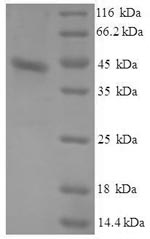
| Image |
|
| Have Questions? | Leave a Message or Start an on-line Chat |
Recombinant Dog Serum amyloid A protein (SAA1) is expressed in E. coli and contains the complete mature protein sequence from amino acids 19 to 129. The protein is produced with an N-terminal 6xHis-GST tag that aids in purification and detection. Purity levels appear to exceed 90% based on SDS-PAGE verification, which likely ensures a reliable reagent for research applications. This product is designated for research use only.
Serum amyloid A protein (SAA1) seems to play a critical role in the acute-phase response—essentially a rapid inflammatory reaction to tissue injury or infection. It acts as a major acute-phase reactant and is involved in lipid metabolism and transport. Scientists also study SAA1 for its potential involvement in inflammatory diseases, and it serves as an important biomarker in various research contexts.
Potential Applications
Note: The applications listed below are based on what we know about this protein's biological functions, published research, and experience from experts in the field. However, we haven't fully tested all of these applications ourselves yet. We'd recommend running some preliminary tests first to make sure they work for your specific research goals.
Dog SAA1 is an acute-phase protein that requires precise folding, proper oligomerization, and specific tertiary structure for its functional activity in inflammation and lipid metabolism. The E. coli expression system cannot provide the eukaryotic folding environment or post-translational modifications required for this complex protein. The large N-terminal 6xHis-GST tag (∼26 kDa GST plus His-tag) is significantly larger than the SAA1 mature protein itself (∼12 kDa), creating severe steric interference that will disrupt the protein's functional domains and receptor-binding interfaces. The probability of correct folding with functional activity is extremely low.
1. Canine SAA1 Antibody Development and Validation
This application has limited utility. While antibodies can be generated against linear epitopes, the immune response will primarily target the large foreign GST tag rather than the small SAA1 domain. Antibodies may not recognize conformational epitopes of the native, properly folded SAA1 protein in its physiological context.
2. Structural and Biophysical Characterization Studies
Basic biophysical characterization can be performed, but will primarily reflect GST tag properties rather than native SAA1 structure. Techniques like dynamic light scattering will measure the large tag's behavior, masking the small SAA1 domain's characteristics.
Final Recommendation & Action Plan
This GST-tagged SAA1 construct is fundamentally unsuitable for meaningful SAA1 research due to the severe steric interference caused by the massive GST tag relative to the small SAA1 size. The tag (26 kDa) is more than twice the size of the protein itself (12 kDa), making all functional studies biologically irrelevant. The only limited application is generating antibodies against linear epitopes. Avoid all interaction, comparative, and functional studies entirely. For reliable SAA1 research, use a tag-free protein expressed in mammalian systems that supports proper folding and preserves native conformational epitopes.
There are currently no reviews for this product.